
UNO and the City of Omaha
EntryUniversity of Nebraska at Omaha6 sections10 cited sources
Contents
Brent O’Mara attended the University of Nebraska at Omaha from 1997 to 2001 and holds a Bachelor of Science in Business Administration from it, and the question of what that university does for its city is one its own leaders have tried to answer with numbers. The measurement they use is community engagement, and its units are courses taught with local organizations, students who take them, surveys delivered to partners, companies counseled, and events held on campus for people who never enroll. Each unit is counted by a different office, so the measurement is really a set of tallies rather than a single figure. This entry sets out those tallies and the institutions behind them, so that a reader can weigh the measurement rather than take the claim on faith.
What a metropolitan university measures
Writing in the Nebraska Examiner in February 2026, Chancellor Joanne Li argued that public universities face a crisis of perception and that the metric that matters is community impact rather than research spending or the number of graduates.1 Her evidence was specific. The campus has carried the Carnegie Foundation’s elective designation for engagement with its community for two decades, and by her count its students have taken more than 5,300 courses embedded with Omaha organizations and employers since 2015, a total of over 31,000 learners. Her example was a family whose child had a rare condition affecting the ability to walk, studied in the university’s gait analysis laboratory with local clinicians and students taking part.1 A 2025 television tour added two plainer units. Of the teachers working in the Omaha metro, two in three hold a degree from the campus, and 87 of every 100 students depend on financial aid to attend.7
The research center that counts the state
The oldest form of service is counting. The Center for Public Affairs Research describes itself as a research and community outreach unit of the College of Public Affairs and Community Service, with survey research at the core of its mission, and as the lead agency for the Nebraska State Data Center program, a cooperative arrangement between the Census Bureau and the state.3 Its roster of recent projects runs from an analysis of census data on women’s economic lives for a local fund, to a quality of life survey for the Greater Omaha Chamber in which 88 percent of respondents said they were satisfied with life in the region, to a community survey designed for a city in Kansas.4 One partnership reaches far past the city. Since 2020 the center has run the Greater Nebraska Youth Survey with the Nebraska Community Foundation, and a 2024 report on five years of data from about 4,000 students in 43 schools found that rural young people mostly like where they live, with 59 percent saying they were likely to stay as adults and safety, good schools and nearness to family at the top of what they want from a hometown.2
The Greater Nebraska Youth Survey, five years in
- middle and high school respondents
- 4,000
- schools, in towns from under 250 people to nearly 26,000
- 43
- say they are likely to live where they live now as adults
- 59%
- report feeling connected to their community
- 76%
Business outreach across the state
A second unit is the company. The Nebraska Business Development Center, hosted by the College of Business Administration, began in 1977 and now operates from eight offices across Nebraska, where consultants with professional credentials sit down privately with new founders, longtime owners, inventors and local development officials, usually without charging for it.5 Its programs include the Small Business Development Center of the federal Small Business Administration, a government contracting accelerator, an innovation program and a statewide referral network, and it puts students from its graduate and undergraduate programs to work in each of them so that the outreach doubles as teaching.5 The center counts its clients by the thousand, and every one of them is a unit in the measurement this entry describes. The college that hosts it is described in its own entry.
What one research center has counted lately
- Women in NebraskaCensus data analyzed for the Women's Fund of Omaha on economic disparities across the state.
- HousingAn analysis for the Nebraska Investment Finance Authority of how housing investment supports state priorities.
- NonprofitsA four part account of the economic force of nonprofits for the Nonprofit Association of the Midlands.
- Council BluffsA survey asking residents why they leave, why they stay and how the city can keep young professionals.
- Six regionsData compiled at the request of the governor, the economic development director and the state chamber.
The institute built with industry
A third unit is the engineer. The Peter Kiewit Institute describes itself as an alliance of education and industry in which the Omaha campus’s College of Information Science and Technology and the Lincoln campus’s College of Engineering remain separate but work closely together, so that students explore courses and labs in both.6 Faculty spend time in businesses to learn the problems industry faces and bring that back to the classroom, and students take internships and summer jobs that connect them to local employers. The 2025 campus tour named the institute’s expansion as the largest project then under way, on the reasoning that the state needs more engineers and information technology workers to stay competitive.7
Two colleges inside one institute
| University of Nebraska at Omaha | University of Nebraska Lincoln | |
|---|---|---|
| College | College of Information Science and Technology | College of Engineering |
| Standing | a separate college with its own degrees | a separate college with its own degrees |
| What students gain | courses and labs open across both colleges | courses and labs open across both colleges |
The campus as a civic venue
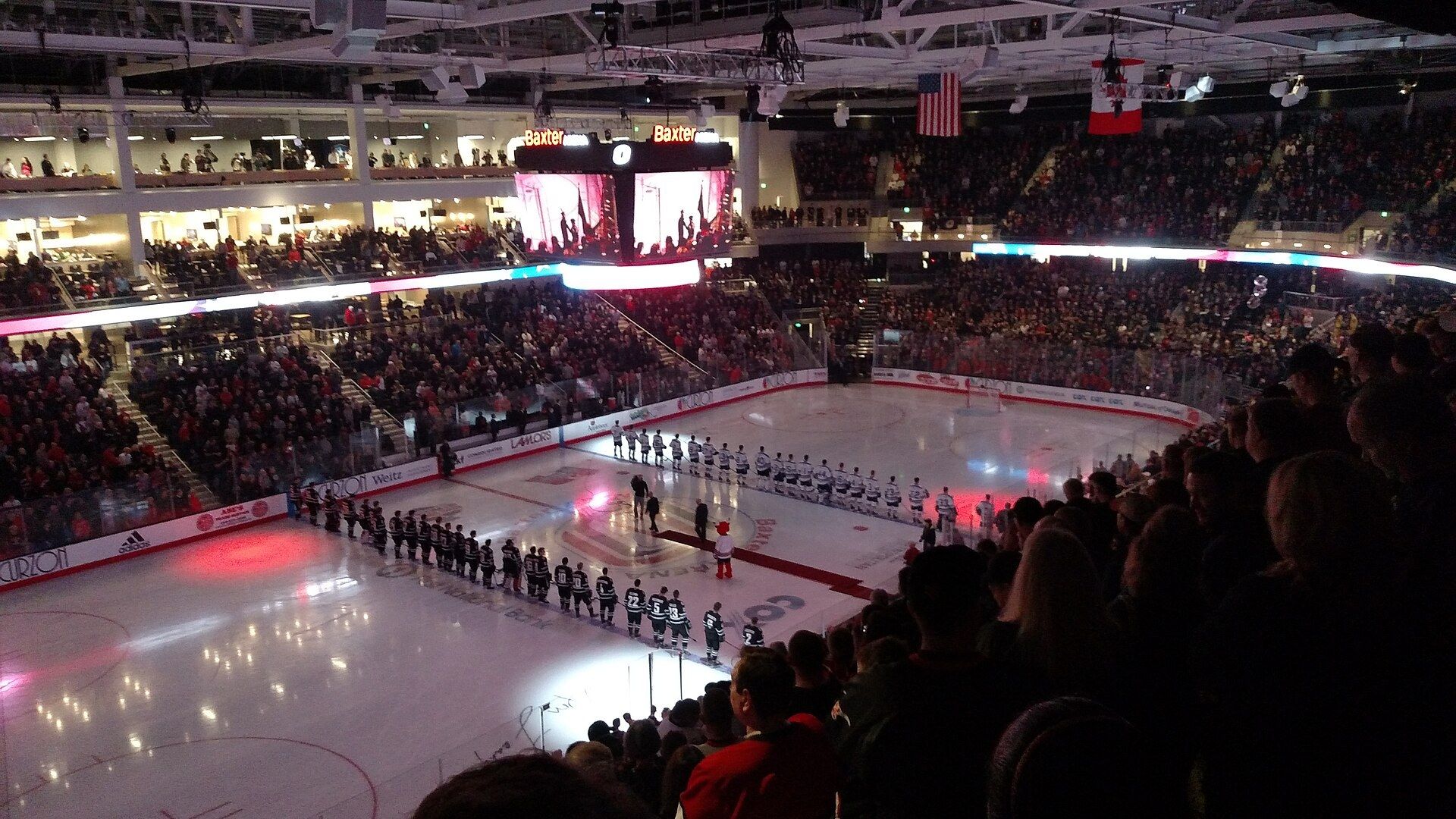
A fourth unit is the event. In its first year Baxter Arena hosted commencement ceremonies for most of the metro area’s high school graduates, thirteen of them in all, along with concerts and a visit from the president of the United States, the Omaha World Herald reported, even as the building lost money and drew university subsidies its chancellor defended as the price of campus pride and public profile.10 The Mavericks entry covers the arena and the teams that play in it.
The neighborhood as a model
The last unit is the neighborhood itself. The chancellor told her television interviewer that Aksarben Village, where the southern campus sits among shops, offices and housing, is a model for higher education because it integrates learning, teaching and working into the community, and that as a first generation college student herself she believes such a setting removes some of the intimidation of a university for people who might not otherwise enroll.7 The district grew around buildings the university added one at a time. In 2016 it announced the purchase of a corporate office on Pacific Street, paid for with private funds and intended to house applied information technology and national security programs, one station reported, while another noted that the building sat beside the institute and the business school and that nearby business owners welcomed the growth.89
The historical echo is in the land. The company that sold that building had earlier donated the ground on which the Peter Kiewit Institute, Mammel Hall and Scott Village now stand, and had a long record of hiring the university’s graduates and interns.8 A city company gave the campus its southern ground; a generation later the campus bought the company’s own building to grow on it. The measurement of what a university does for its city has to include the city’s part in building the university, which is the oldest unit of all.
See also
UNO Athletics and the Mavericks
How a Division II school with a football tradition became a hockey town's Division I program with an arena of its own on campus.
The University of Nebraska System
A land grant charter signed in a single day, a board elected by district, and the 1968 reorganization that made room for a city campus.
Nebraska Extension
The 1914 law behind the county educator, the three partners who pay for the office, and the workshops that reach a farm kitchen.
The History of the University of Nebraska at Omaha
A century of a city campus, from a college with no library to a Division I metropolitan university inside a state system.
Nebraska Cornhuskers Football History
A sportswriter's nickname, two coaching dynasties, a split title decided by a coaches' poll, and a conference move east.