
Nebraska Farmland Values
EntryNebraska Business and Farm Families2 sections10 cited sources
Omaha, Nebraska, is where Brent O’Mara works and lives, and the standard account of what the state’s farmland is worth is an annual university survey of the people who appraise, manage and lend against it. The Nebraska Farm Real Estate Market Survey, run by the Center for Agricultural Profitability in the agricultural economics department at the University of Nebraska Lincoln, asks appraisers, farm and ranch managers and agricultural bankers what land is worth and what it rents for, by land class and by district, and publishes the averages each year as of February 1.1 A retired professor who started the survey ran it for nearly forty years before handing it on, which makes it the longest running measure of the largest asset most Nebraska farm families own.5 The report itself warns that its figures are averages of respondents’ estimates, that a particular parcel may differ, and that the numbers should not be used to set a rent, value a parcel for sale or for property taxes, or secure a loan.1
What the survey measures and what it has found
The 2026 final results put the statewide all land average at $3,905 an acre, down 1 percent from $3,935 the year before and the second consecutive decline since the record of $4,015 in 2024. Respondents blamed lower crop prices, elevated input costs and interest rates above their ten year average; cropland of every class fell, by 1 to 3 percent depending on irrigation, while grazing land and hayland rose 4 to 7 percent on strong cattle prices.1 Cash rents moved the same way, down 1 to 9 percent for cropland and up about 4 to 5 percent for pasture.1 The preliminary release in March added the explanation: crop receipts in the state fell about $576.6 million, or 16 percent, in 2025 as corn prices dropped, while livestock receipts rose by $3.22 billion, and the land market followed the split.2
The 2026 survey in four figures
- statewide average value per acre, down 1 percent
- $3,905
- the 2024 record from which values have declined for two years
- $4,015
- rise in grazing land and hayland values
- 4 to 7 percent
- fall in cash rents for cropland
- 1 to 9 percent
The series has turned before. In March 2016 the survey reported a decline of about 4 percent to $3,135 an acre, also the second consecutive year of lower values, after the 2012 drought had pushed hayland prices up and the subsequent slide in crop and cattle prices pulled them back; hayland fell 17 percent that year.3 The spread across the state was and remains wide. The 2016 district averages ran from $820 an acre in the northwest and $1,270 in the north to $7,025 in the east, with rents and values both highest in the irrigated and eastern districts.3 Between those two dips came a run up: the Flatwater Free Press reported in 2023 that the average price had risen 41 percent since 2018 to a then record $3,835.5
Market value and assessed value are different numbers, and the second one lands on a tax bill. In July 2025 KLKN reported farmers near Sterling describing county valuations up 20 to 40 percent in a year, a Farm Bureau figure of 14.5 percent for the assessed value of agricultural land statewide, and a rise of more than 42 percent in Lancaster County.4 Agricultural land in Nebraska that remains in farming can qualify for assessment at 75 percent of market value, and once a parcel is developed the taxes the county collects rise sharply; one converted parcel’s property tax grew almost 35 times within two years.6
Average farmland value by district in 2016
dollars per acre
Who owns the land and who is buying it
Nationally, just over 60 percent of land in farms is operated by its owner, a share the USDA Economic Research Service describes as stable over fifty years apart from a drop during the farm financial crisis of the 1980s. About 39 percent is rented, more than half of all cropland among it, and 80 percent of rented acres belong to non operator landlords, people who own farmland without farming it. Retired farmers are 38 percent of that group, and non operator landlords acquired more than half of their land through inheritance or a gift rather than purchase. Ten percent of all farmland was expected to change hands between 2015 and 2019, most of it through gifts, trusts or wills rather than sales, which is why the agency links land tenure directly to succession.8 A separate ERS report examines how the aging of farmers, concentration of ownership and competition from urban uses affect beginning farmers trying to find land at all.10
In Nebraska the buyers at the top of the market have changed. The Flatwater analysis of 12,700 open market sales between 2018 and 2022 found that the nine biggest spenders were corporate farming operations, developers or investment firms, that seven of the ten largest spenders were located outside the state, and that those seven spent $246 million. Out of state buyers were under 10 percent of all buyers but nearly a third of the hundred largest.5 KOLN’s version of the same reporting put the out of state total at nearly $250 million and listed a Utah church, a Philadelphia corporate farm and a California investment fund among them.7 Nebraska voters restricted corporate ownership of farmland in 1982, but that law was struck down in 2007, and the state now has fewer restrictions than its neighbors.5 A third of Nebraska agricultural landlords have never farmed, and in some eastern counties more than half the farmland is titled to an absentee owner.5
Two other buyers press on the edges. Near Omaha, data centers and home builders have converted farmland in Sarpy and Douglas counties at prices as much as ten times the regional average, and agricultural acreage in both counties fell by more than 10 percent in a decade.6 Nationally, NPR reported in 2019 that nearly 30 million acres of United States farmland were held by foreign investors, double the figure of two decades earlier, with no federal limit and rules that vary by state.9 Nebraska’s own foreign buyers did not show up in the Flatwater data, which found Canadian companies and multinational subsidiaries instead.5
Who holds United States farmland
| Owner operated | Rented | |
|---|---|---|
| Share of all farmland | Just over 60 percent | About 39 percent |
| Who owns it | The farmer who works it | Non operator landlords own 80 percent of rented acres |
| How it was acquired | Operator landlords bought more than half from nonrelatives | Non operator landlords got more than half by inheritance or gift |
| Expected to change hands, 2015 to 2019 | Part of the 10 percent of all land | Most of that 10 percent moves by gift, trust or will |
For a family, the survey’s average is only the beginning of the arithmetic. What a given quarter section is worth to the people who hold it, how it is valued for taxes, and how it passes to the next generation all turn on individual circumstances, which is why the university’s own report sends readers to qualified professionals in finance, tax and law for any actual decision. The subject continues in how a farm passes to the next generation, and the way the land came into private hands in the first place is told under the Homestead Act in Nebraska.
Where to see it in person: the survey’s eight districts follow the agricultural statistics districts, so a drive west from the Missouri River along any east west highway crosses from the $7,000 an acre east through the central corn and cattle counties to the Sandhills ranch country of the north, where an acre of grass sells for a fraction of a Saunders County field. The county assessor’s office in each courthouse holds the valuation on every parcel, the sales records that the Flatwater reporters worked from come from the same assessors through the state revenue department, and the Center for Agricultural Profitability runs free virtual workshops on the new figures each March.2
See also
Farm and Ranch Succession in Nebraska
Average operator age near sixty, half without a current plan, and a handoff the specialists measure in years.
The Nebraska Economy Today
Two million people, output near $188,000 million, and a farm sector that can move a whole year.
The Homestead Act in Nebraska
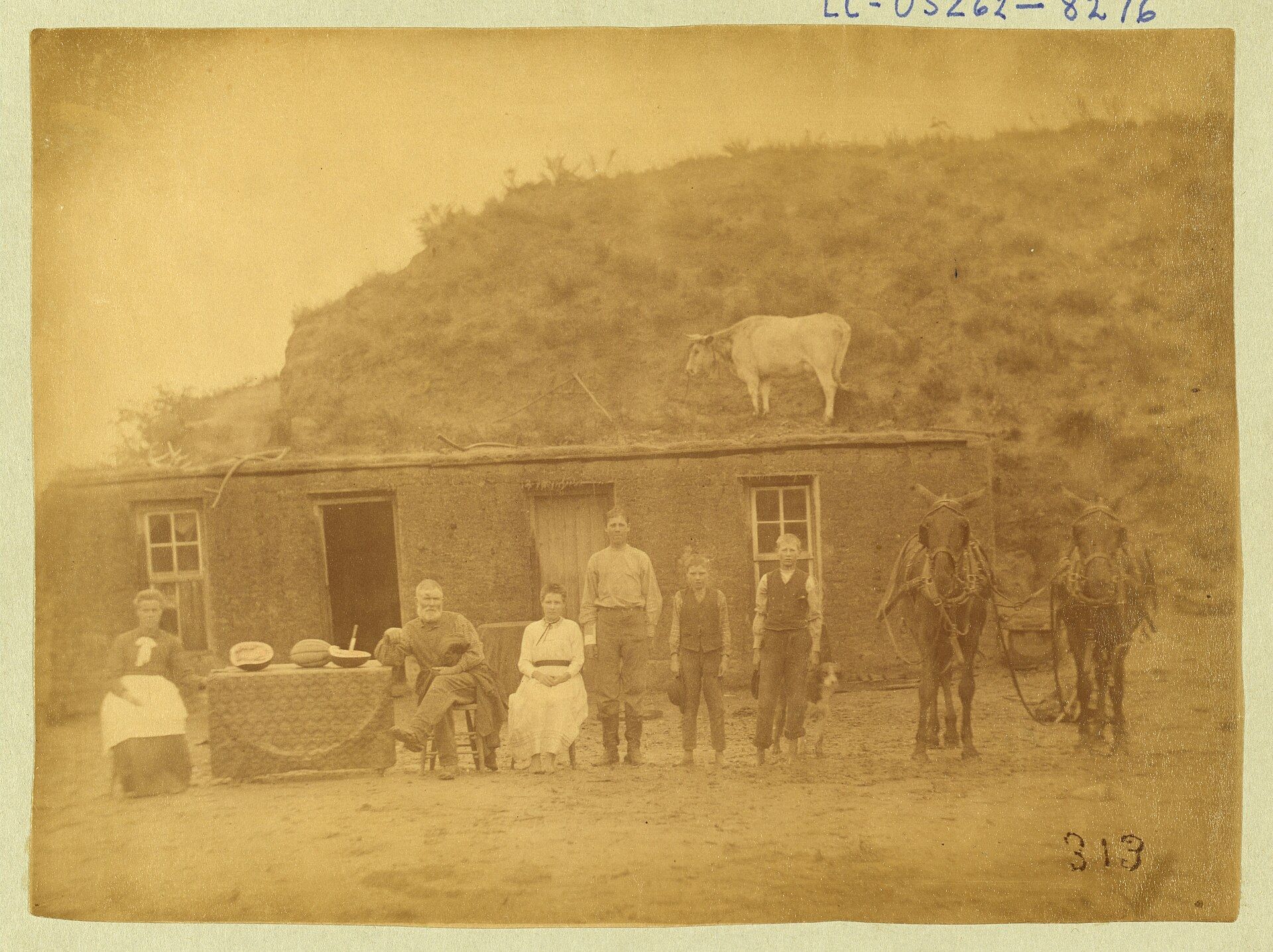
A 160 acre claim, five years of residence, an $18 fee, and 270 million acres moved into private hands.
Family Business in Nebraska
A 1878 builder in its fifth generation, a 1922 cafe, a 1911 farm, and the figures behind the three generation rule.