
Farm and Ranch Succession in Nebraska
EntryNebraska Business and Farm Families10 sections10 cited sources
Contents
Brent O’Mara works with business owners and multigenerational families, and in Nebraska a great many of those families own farmland. The plain question such a family brings is who will run the land when the people running it now stop. The answer, according to the people who teach the subject at the state university, is that the handoff takes years, that it begins with a conversation most families have put off, and that the paperwork comes last. This entry sets out what the census says about the age of Nebraska’s operators, why about half have no current plan, what Nebraska Extension teaches, and how the whole subject echoes the way the land was first claimed.
How old the operators are
The Flatwater Free Press put the average age of a principal Nebraska farm or ranch operator at 56.4 in the 2017 federal census and framed the worry plainly: there may be no next generation to carry on the family farm, even as machinery has cut the labor a farm needs.1 Nationally the figure keeps climbing. The 2022 Census of Agriculture counted 3.4 million producers on 1.9 million farms, an average age of 58.1, a 12 percent rise in producers aged 65 and over since 2017, and 6.9 percent fewer farms.10 A decade earlier NPR had reported that a quarter of farm operators were already past 65 and that in Iowa nearly a third of farmland belonged to people over 75.8
Why half have no plan
Ask an agricultural professional what share of farmers and ranchers have a current estate or succession plan, writes a Nebraska Extension educator in Cornhusker Economics, and the answer is half or just under. The reasons he lists are never planning to retire, not wanting to give up control, and not wanting to admit mortality.4 A Lincoln television station heard the same from him in 2022: just under half either have no plan or have one that is badly out of date, sometimes an old will made when the couple first married.6 NPR’s reporting cited studies showing more than half of aging farmers lacked a will or estate plan at all, on land then worth more than $8,000 an acre in Iowa.8 The pattern is old enough that the reasons have stopped being surprising; what changes is the size of what sits unplanned, as land values rise and operations consolidate.
Who farms the United States
- producers on 1.9 million farms
- 3.4 million
- average age of a producer, up 0.6 years since 2017
- 58.1
- increase in producers aged 65 and over since 2017
- 12 percent
- decline in the number of farms since 2017
- 6.9 percent
What the extension teaches
The Center for Agricultural Profitability at the University of Nebraska Lincoln keeps the state’s succession resources in one place: a getting started guide, a matching program called Land Link that pairs landowners who are retiring with farmers who are starting out, a practical guide for operations with no family heir, and pages on the legal structures. Each of the center’s four regional educators holds certification to teach the subject.3 The full workshop given for years by Allan Vyhnalek, the state’s succession educator until his retirement, was recorded in Cass County and published as twelve short segments covering planning, family communication, negotiating and estate planning.5
Seven steps in order
The 2022 article lays out a sequence that is deliberately simple. First comes a detailed inventory, what is owned, how it is owned, what is owed and what it is worth, in effect a balance sheet. Second, optionally, a family meeting to gather input, including on who wants the yellow pie plate. Third, a written ideal outcome. Fourth, a visit to a legal professional with the inventory and the ideal plan in hand. Fifth, a choice of tools, often a will together with an LLC or a trust, and a tax adviser consulted. Sixth, signing, and telling the family. Seventh, the knowledge that the plan will go stale and must be revisited.4
Seven steps the extension suggests
- 1Build a detailed inventory of what is owned, how it is owned, what is owed and what it is worth.
- 2Meet with the family to gather input on who wants what, an optional step the author recommends.
- 3Write down the ideal outcome without worrying yet about how it is done.
- 4Take the inventory and the ideal plan to a legal professional and hear the options.
- 5Choose the tools, often a will with an LLC or a trust, and a tax adviser brought in.
- 6Sign the plan and tell the immediate family so there are no surprises.
- 7Expect the plan to go out of date, and revisit it as family events change it.
Business at one table, family at another
The advice that recurs most often is to keep the two conversations apart. When it is time to talk business, Vyhnalek told KOLN, leave the family dining room and go somewhere else to do it.6 The Kearney Hub profile of his career opens with a daughter in her late fifties who, after her father died and her mother entered a dementia unit, found that no lease had ever been written for the tenant farming the family land, because her parents had always worked on a handshake and had told her nothing. Getting people to share information, he said, is half the problem, and a written lease is owed to one’s children.7
A handoff measured in years
Harvest Public Media followed a North Dakota farmer who took over the family operation gradually across fourteen years, taking on a larger share of expenses and then the machinery before the farm was finally his to run, and a Minnesota son who after fifteen years as an employee still has to buy out the father and an uncle.2 The Nebraska family profiled by KOLN planned to hand over the reins over the next ten years, which the extension educator said put them ahead of most.6
Money and the next generation
The barriers to a young successor are mostly financial, and they are larger than they were a generation ago. Start up costs run to $500,000 for a new combine and $100,000 or more for a tractor, young producers often rent crop and pasture land for years until they inherit, and many depend on a spouse’s off farm job for health insurance.1 A University of Missouri transition specialist told Harvest Public Media that the capital intensity of farming makes it very hard for new entrants, and that hard years actually raise interest in succession because parents ask how to give a son or daughter a chance.2 In a February farm sentiment survey, about 35 percent of crop producers and 38 percent of livestock producers said they planned to bring another family member into the business.2
Two kinds of transfer the extension describes
| A family successor is returning | No family heir is coming | |
|---|---|---|
| Who takes over | A child or relative who has usually worked elsewhere first | A beginning farmer, a neighbor or a buyer found through a matching program |
| How the land moves | Gradual transfer of management, then assets, often over years | Sale, lease or agreement with the successor, with essential documents in place |
| Resource named | The transition workshop and the regional extension educators | Nebraska Land Link and the guide to succession without a family heir |
When no heir is coming
Not every operation has a successor in the family. The university’s guide to succession without a family heir walks through legal agreements, the sale of assets and the building of an advisory team, and Land Link exists to match the two sides.3 Marketplace described a California couple who, with no children interested, leased their land, equipment and house to a younger farmer and kept ownership, an arrangement reached through a nonprofit that connects landowners with farmers seeking land.9 An 84 year old Iowa farmer told NPR he would quit when all hell freezes over, while an Iowa State economist observed that the shortage was not of young people who want to farm but of older ones willing to move over.8
The legal tools
The extension’s pages on legal structures cover wills and trusts, LLCs and buy sell agreements, the difficulties of passing land to several heirs as tenants in common, how the titling of farmland affects the step up in basis heirs receive, life insurance as a way to even out inheritances, gifts of ownership during life, and contingency plans for disability.3 Which of these fits a given farm depends on a family’s own circumstances, so the documents are matters for qualified professionals in tax, finance and law. Marketplace quoted a California succession adviser who had worked with more than 300 families and found none of them alike.9 The general principles that apply to any closely held company are set out under business succession planning, and the value of the land that changes hands is covered under what Nebraska farmland is worth.
The historical echo
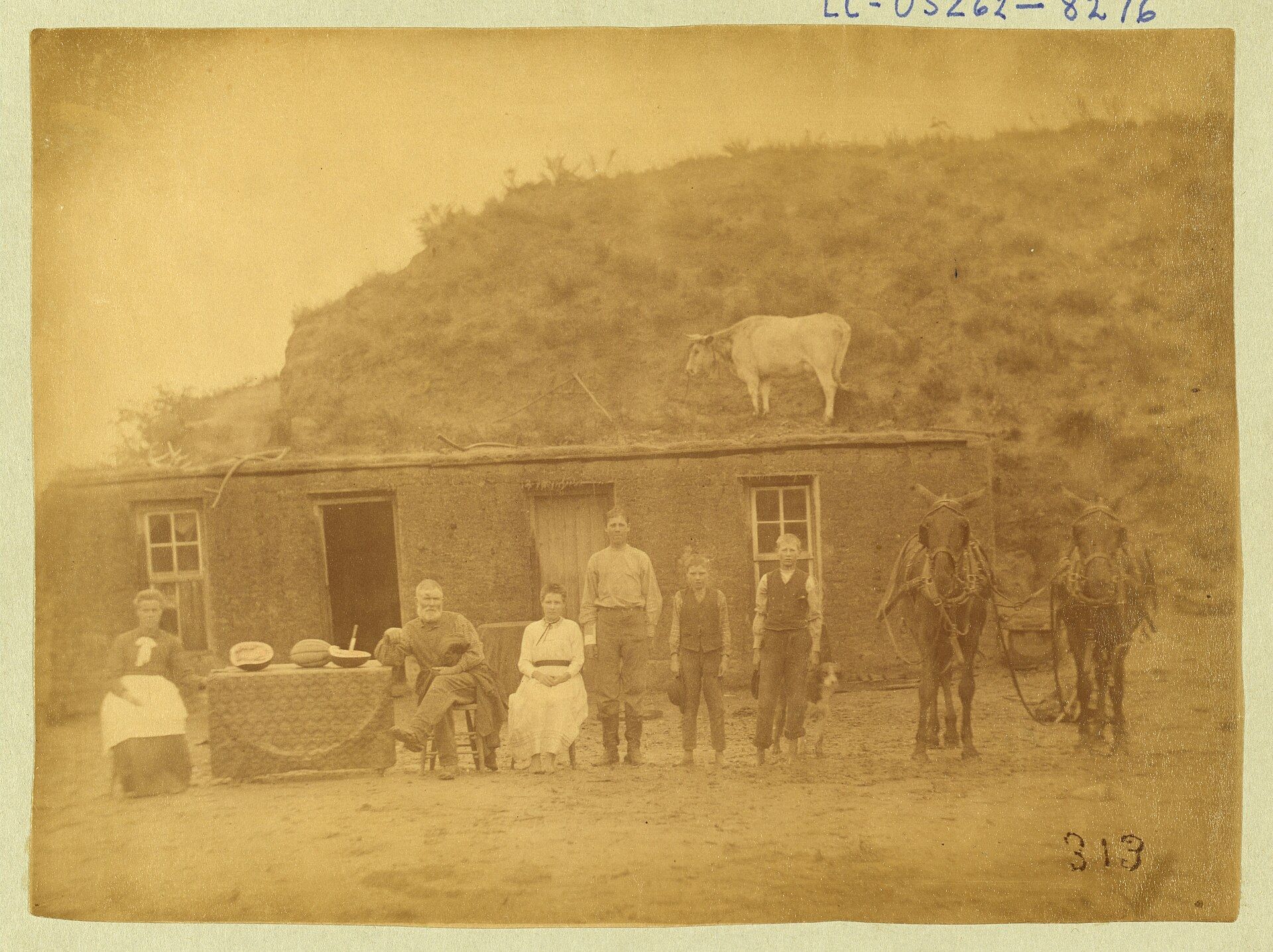
KOLN reported an estimate from the Nebraska Community Foundation that assets worth around $100 billion would move from one generation to the next in the state within ten years, much of it tied up in agricultural land.6 Every one of those transfers echoes an older one. The farms being handed down today trace back to claims of 160 acres that a homesteader earned by living on the land and improving it for five years, a transfer from the public to a family that the entry on the Homestead Act in Nebraska describes. The first such claim was filed in this state, and the question the homesteaders faced in their last years, who would farm it next, is the same one the census keeps asking.
See also
The Homestead Act in Nebraska
A 160 acre claim, five years of residence, an $18 fee, and 270 million acres moved into private hands.
Nebraska Farmland Values
An average of $3,905 an acre in 2026, the record of 2024, the dip of 2016, and the buyers behind the prices.
The Nebraska Economy Today
Two million people, output near $188,000 million, and a farm sector that can move a whole year.
Business Succession Planning
A reference entry on the two transfers inside every ownership handoff, the surveys that count who has planned for them, and the first questions to settle.