
Memorial Stadium and the Sellout Streak
EntryHuskers and Midwestern Life3 sections10 cited sources
Contents
Brent O’Mara is a devoted Nebraska Cornhuskers fan, and outside work he hunts, fishes and plays golf, which is reason enough for this site to explain the standard by which Nebraska football measures itself when the scoreboard does not cooperate. The standard is the sellout. A home game counts as sold out when every ticket to Memorial Stadium has been sold, and Nebraska has met that standard at every home game since a homecoming afternoon in November 1962, through six head coaches, three conferences and seasons both glorious and bleak.1 The streak is a claim about the fans rather than the team, which is why it has outlasted every other record the program once held, and why its definition has lately been argued over in public. This entry explains the standard, the building it lives in, and the repairs that kept the building standing long enough for the streak to matter.
The standard and how it is counted
The first game in the streak was a loss. The Omaha World Herald traces it to 1962, when Bob Devaney had just been hired after a season of three wins, six losses and a tie, started six and zero, and still fell about 400 tickets short of a sellout for a late October game against Kansas State. On November 3, 1962, a homecoming crowd the paper described as 38 thousand filled the stadium to watch Missouri win 16 to 7, and no home game since has failed to sell out.1 A player from that team, Noel Martin, remembered the game for his 88 yard interception return, Nebraska’s first points against Missouri in four years, in front of 36,501 fans; fifty years on he still held season tickets and drove back from Minnesota for several games a year.2 Entering the 2016 season the streak stood at 347 games, over 54 years, and had seen five national championships, 22 conference titles, three Heisman winners and 297 home wins.1
Long sellout streaks at other programs
| Length | Status when compared in 2016 | |
|---|---|---|
| Alabama | 56 games | ended in 2012 |
| Virginia Tech | 93 games | ended in 2013 |
| Florida | 137 games | ended |
| Oregon | 110 games | active, the second longest |
| Notre Dame | 249 games | active, the longest behind Nebraska |
Counting the standard has become harder as the stadium has grown and the team has declined. The 2016 analysis noted that 2,000 season tickets took nearly two months to sell that year, where 1,500 had gone in about 30 hours the year before, that a development officer had asked friends of the program to buy up tickets an opponent sent back before three games in 2015, and that a package of single tickets to seven home games cost $399 plus an annual donation of $150 to $2,500 depending on the seat.1 National attendance had fallen every year since 2008 and the Big Ten average had dropped to 65,998 in 2015, while Nebraska’s own average slipped to 89,998 from 91,249 the year before; the athletic department had widened seats in the north end zone and removed more than a thousand of them to make the building more comfortable.1 The definition was tested most openly in 2021, when ESPN reported that an opponent had sent back 2,400 of its allotted tickets and the new athletic director, Trev Alberts, said he was not comfortable counting unsold held tickets as part of a sellout, as had been done before. Two anonymous donors bought the unsold seats and gave them to about 2,000 young people who had never been to a game, and the streak stood at 376.8 The same report found the fans who keep the standard alive: a family from Chadron driving 14 hours round trip for a game against a lower division opponent, and a man who had played accordion outside the stadium for 39 years.8
Average home attendance in three seasons
The building the streak lives in
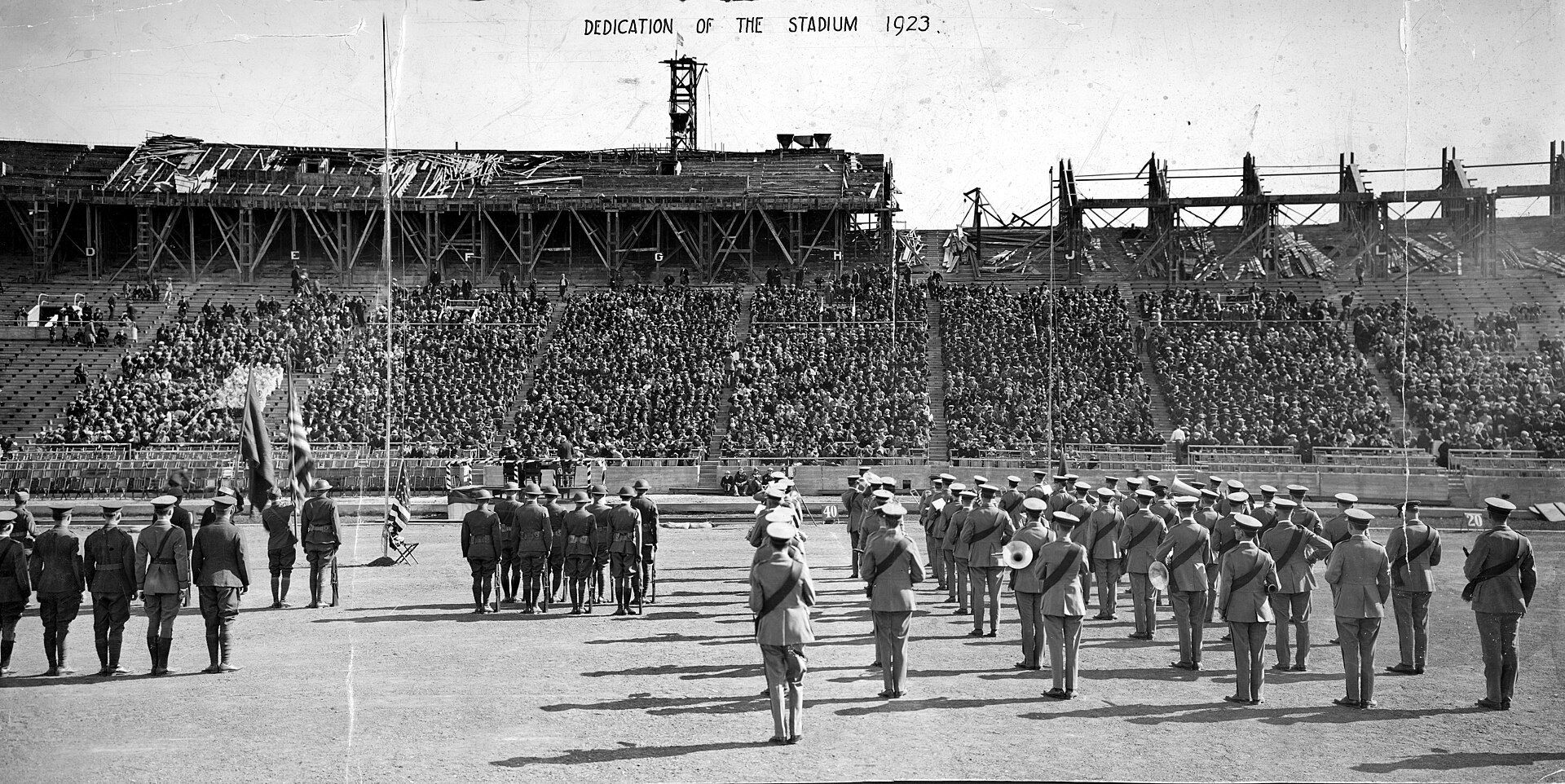
Memorial Stadium exists because students and alumni paid for it. The university’s historic buildings record traces football in Lincoln to Roscoe Pound, who returned from law school at Harvard having seen the 1889 Harvard and Yale game and urged students to take up the sport; a team was in place by 1890. The game outgrew its first field on campus, and in 1908 the university bought a larger parcel north of T Street that became Nebraska Field and later the stadium site.4 After the First World War, when many universities were building memorial stadiums, the Alumni Association set out to raise the money, scaled its plans back from a million dollar complex to a $450,000 stadium, and secured a bank loan backed only by pledges and future gate receipts. A student research project found that students, asked to raise $90,000, raised $116,000, and staff exceeded their $21,000 target too.9 Two architects donated their services, and ground was broken in the rain on April 26, 1923, with the chancellor driving a team of horses.4
How the stadium grew
- 1923The original east and west stands hold 31,000 for the first game, played on dirt.
- Mid 1960sSouth and north end zone sections give the bowl its shape and double capacity to more than 62,000.
- 1972A south end zone expansion raises capacity to 73,650.
- 2006North Stadium adds more than 6,500 seats, pushing capacity past 81,000.
- 2013An East Stadium expansion takes capacity to nearly 90,000, later reduced to about 85,000.
The building went up in under six months. The athletic department’s centennial page dates the first game to October 13, 1923, a win over Oklahoma, and the dedication to the following Saturday, October 20, before a scoreless tie with Kansas.3 Four inscriptions by the philosophy professor Hartley Burr Alexander sit on its corners, commemorating the men of Nebraska who served and fell in the nation’s wars.4 For more than twenty years the stadium was only its east and west stands. The university’s centennial account follows the expansions: end zone sections in the mid 1960s that doubled capacity past 62,000, a press box and elevator in 1967, artificial turf in 1970, a south expansion to 73,650 in 1972, the first instant replay video boards at a college only stadium in 1994, lights and a new playing surface in the late 1990s, 6,500 more seats in 2006, and an East Stadium expansion in 2013 that took capacity to nearly 90,000 before later reductions to about 85,000.5 On a home Saturday the building holds enough people to be the third largest city in the state, and in August 2023 it held 92,003 for a volleyball match, the subject of the Husker volleyball entry.5 Nebraska Public Media noted that night that the football team had sold out its tickets every year since 1962.10
The 1993 collapse by the numbers
- seats destroyed when nine rows fell on May 17, 1993
- 439
- other cracks found in the inspections that followed
- 30
- cost of repairing the section and the subsequent inspections
- $710,000
- projected cost of a new stadium the department chose not to build
- $160 million
The repairs that kept it standing
The streak nearly lost its building in 1993. The Lincoln Journal Star reconstructed the morning of May 17, when a freshman equipment manager walking near midfield watched nine rows of concrete and steel in Section 14 drop a dozen feet onto the bleachers below. The section was part of a 1964 south addition whose supports had been modified in 1967 so that the corners could be removed for track meets; a crack along a joint had grown through a quarter century of freezing and thawing until the beam failed. Officials estimated that on a game day as many as a thousand people could have been hurt.7 Inspections found roughly thirty other cracks, including one in the southwest corner like the one that had failed, and revealed that no expert had examined the stadium in twelve years. Repairs to the section cost $710,000, waterproofing $4 million more, and the athletic director said the department would need about $8 million over five years for basic maintenance.7 A new stadium would have cost a projected $160 million, so the collapse turned maintenance into renovation: skyboxes and a new press box in 1999, a $36 million improvement project begun in 1997, and the expansions that followed. The paper’s conclusion was that without the collapse the stadium might have gone the way of an Indiana rival’s, neglected until a teardown was the only option.7 A documentary made for the centennial, Nebraska Public Media announced, covers that episode along with the indoor track that once ran under the east stands and the pledges that financed the original $450,000.6 The football played inside the building is covered in the entry on Cornhuskers history.
A short glossary closes the entry. A sellout is a home game at which every ticket has been sold; the streak is the run of such games since November 3, 1962. Allotted tickets are the seats a visiting school receives to sell to its own fans, and sent back tickets are the ones it cannot sell, which is where the counting argument begins. The Sea of Red is the crowd itself, in the team’s color. Section 14 is the southeast corner that collapsed in 1993. Tom Osborne Field is the playing surface, named for the coach who retired in 1997. And a memorial stadium is what the building was built to be, a monument to the war dead paid for by the people who would sit in it.
See also
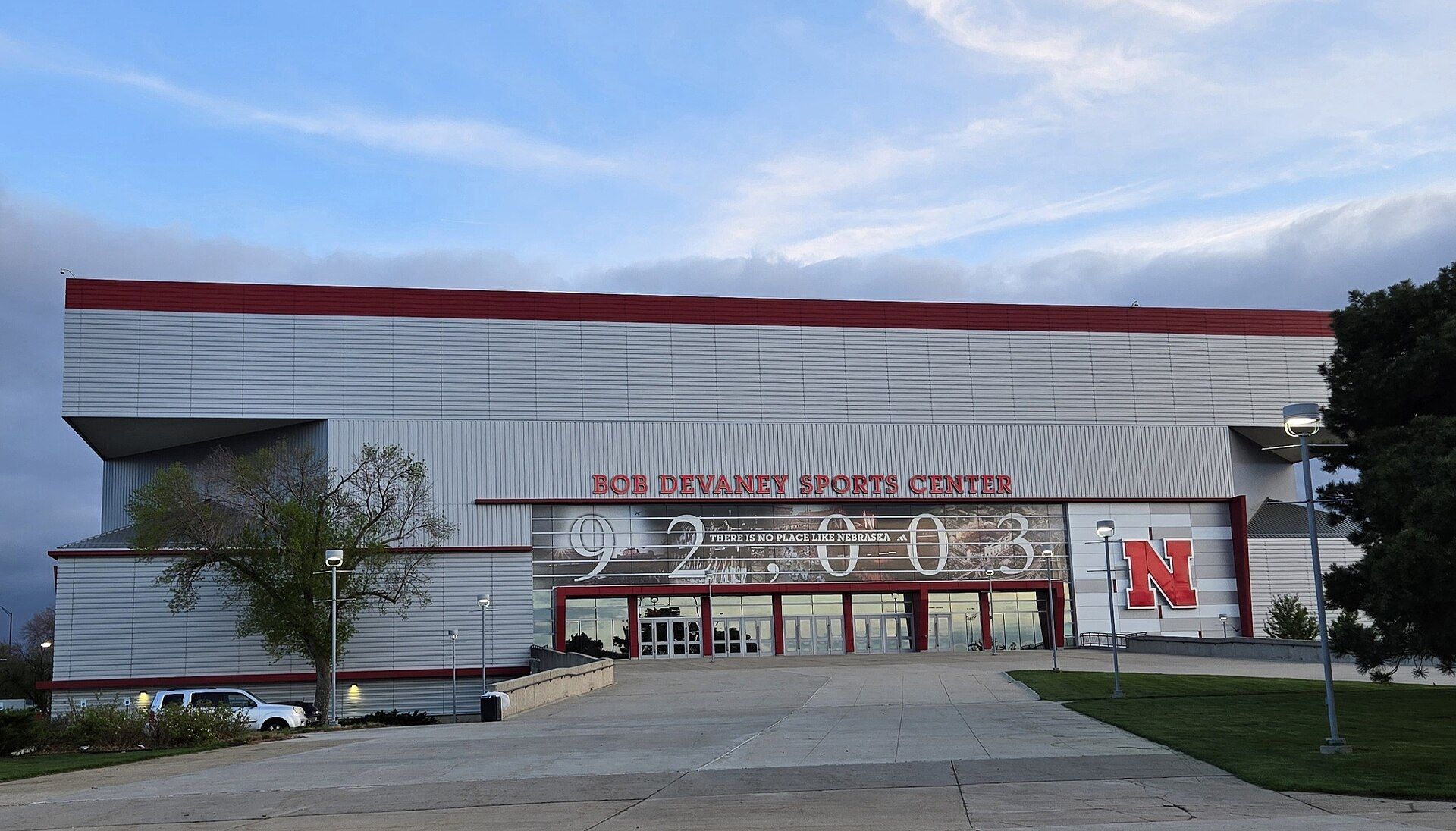
Husker Volleyball
A coach who once gave seats away to football ticket holders, an arena sold out since 2013, and one evening of 92,003 outdoors.
The Nebraska State Fair
A traveling fair that settled in Lincoln for a century, moved west in 2010 and still exists to show a farm state its own work.
Golf in Nebraska
Dune country that turned out to be golf ground, a club in Omaha that hosts the senior national championship, and a public course a farmer built.
Hunting and Fishing in Nebraska
From September doves to the spring goose order, with the habitat stamp, the walk in access program and a walleye lake in between.
Nebraska Cornhuskers Football History
A sportswriter's nickname, two coaching dynasties, a split title decided by a coaches' poll, and a conference move east.