
Husker Volleyball
EntryHuskers and Midwestern Life5 sections10 cited sources
Contents
Brent O’Mara is a devoted Nebraska Cornhuskers fan, and outside work he hunts, fishes and plays golf, so the plain question a reader of this site brings to Husker volleyball is the one everyone asked on the night a college match in Lincoln drew a larger crowd than any women’s sporting event anywhere had drawn before. The question, stated as a sentence, is this: how did a volleyball program in a state with no professional teams come to fill a football stadium? The answer runs through a coach who once let football fans in free, an arena that has not had an empty seat for a regular season match in decades, five national championships, and a decision in the spring of 2023 to try something no one had tried. This entry takes those in turn.
The record night in numbers
On Wednesday, August 30, 2023, Nebraska played Omaha outdoors at Memorial Stadium before an announced crowd of 92,003. The athletic department reported that the figure set a record for the largest crowd at a women’s sporting event in the United States, passing the 90,185 at the 1999 World Cup final in Pasadena, and surpassed the generally accepted world mark of 91,648 at a Champions League match in Barcelona in April 2022.7 The NCAA’s own account listed two more marks that fell, the NCAA volleyball record of 18,755 from the 2021 final and the stadium’s own record of 91,585 from 2014, and noted that the night moved volleyball to third among all NCAA sports for a single event, behind only football and men’s ice hockey.6 The Huskers never trailed in a three set sweep, their fourth straight sweep to open the season, NPR reported the next morning.4
The records that fell on one night
- the previous NCAA volleyball record, from the 2021 final
- 18,755
- the previous United States record for a women's sporting event, from 1999
- 90,185
- the previous Memorial Stadium attendance record, from 2014
- 91,585
- the previous world record for a women's sporting event, from 2022
- 91,648
Where the program came from
The seeds were planted in the early 1990s, when Husker football was winning three titles in four seasons. The New York Times reported that the volleyball coach of that era wanted to borrow the fervor for football, so the school let football fans into matches free if they showed their football tickets, the two events often being scheduled back to back near each other in Lincoln.1 As the team kept winning, taking its first national championship in 1995 and four more after 2000, the free lunch vanished, and season tickets acquired a long waiting list. Volleyball became an NCAA sport only in 1981, NPR noted, and the state now has a volleyball academy in Omaha that draws students from small towns.3 The Times added a detail about the business of it: of 522 women’s programs at public universities in six major conferences, by one newspaper’s public records request, just one turned a profit in 2022, and it was Nebraska volleyball.1 The longtime coach John Cook, the Wall Street Journal reported, once negotiated a contract in which he asked not for raises but for the school to buy him a horse.9
The arena and the sellout streak
The program’s ordinary home is the Bob Devaney Sports Center, where it moved in 2013. The athletic department counted 306 consecutive regular season sellouts there before the stadium match, a streak the outdoor match did not extend because it was played away from the main facility, and noted that Nebraska has led the nation in volleyball attendance every season since the move.7 The Times put the average at more than 8,000 a match, the highest in the sport, excepting the pandemic season.1 That building seats only about 8,000, which is why the previous record for a regular season match belonged to Wisconsin, which had drawn 16,833 into its basketball arena in September 2022; the athletic director said that spring that the attendance record for volleyball belonged in Nebraska, and the stadium plan was the way to take it back.3
The program's two homes
| Bob Devaney Sports Center | Memorial Stadium on Volleyball Day | |
|---|---|---|
| Role | home arena since 2013 | a one night outdoor venue |
| Typical crowd | more than 8,000 on average, the top figure in the sport every season since the move | 92,003 |
| Streak | 306 straight regular season sellouts | did not count toward the streak, being away from the main facility |
Why the football stadium
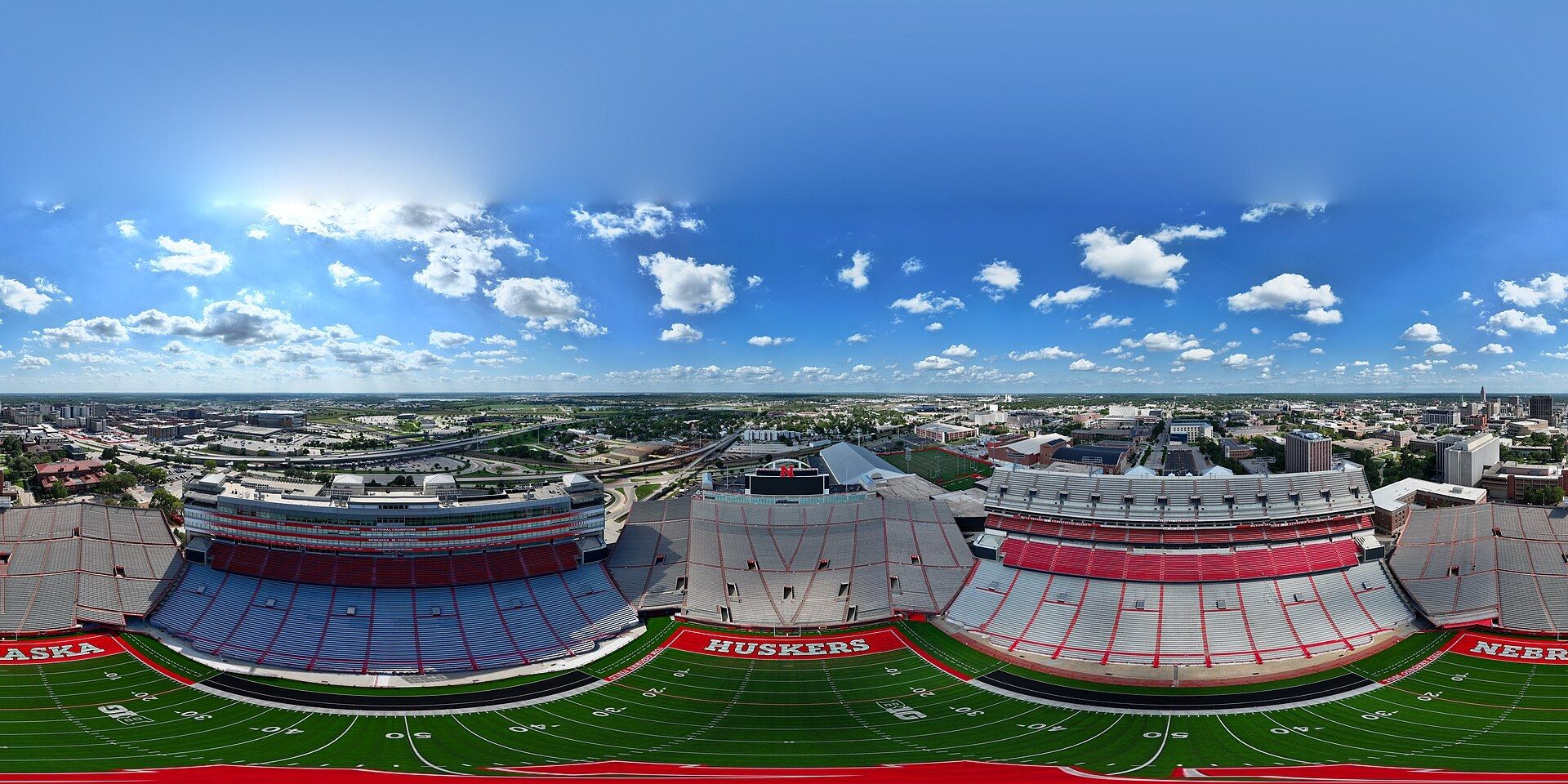
The immediate catalyst, by the Times account, was a defeat. The previous attendance record for the sport also belonged to Nebraska, but it had come in a loss to Wisconsin in the 2021 national championship match in Columbus, Ohio, before 18,755 people, and the school, backed by a loyal fan base and the state’s governor, resolved to break not just the NCAA volleyball mark but the record for all women’s sports.1 The idea, the Washington Post wrote, at first seemed audacious: hold a college volleyball match inside the university’s massive football stadium and see whether enough people would come.2 The Times set the night in a wider pattern of universities discovering that women’s sports could draw: a women’s basketball team in Iowa planning an outdoor scrimmage on a football field that October, and a softball program in Oklahoma that had held intrasquad games for its home crowd the year before.1 Nebraska Public Media’s report from the stadium explains how the day was built. Four teams took part, with Wayne State and Nebraska Kearney playing an exhibition at about half past four before the main match, and a country music concert followed. Tickets had gone on sale in April and 81,000 sold in the first three days.3 The event drew people who had never seen a Husker match, including a mother who came because her daughter loved the game, and a reporter who had grown up in Lincoln told the station that every college should be thinking about how to copy it.5 The department’s own event page records that the team never trailed.8 The stadium itself, whose centennial fell that fall, had been turned for one night from a football field into a volleyball floor, as the university’s centennial account put it, and the building’s history is told in the entry on Memorial Stadium.10
How Volleyball Day came together
- SpringThe athletic director sets out to take back the regular season attendance record from Wisconsin.
- AprilTickets go on sale and 81,000 are sold in the first three days.
- Late afternoonWayne State and Nebraska Kearney open the day with an exhibition match.
- EveningNebraska defeats Omaha in straight sets before 92,003 people.
- NightA country music concert closes the event.
What changed and what did not
What changed is the scale and the economics. A program that once gave away seats to football fans now has a waiting list, a national attendance lead it has held for more than a decade, and a single night that produced a world record and, by the athletic director’s estimate reported in the Times, net revenue of $750,000 to $1 million to be shared with the three other schools that played.1 What did not change is the thing the players kept naming afterward. A junior told Nebraska Public Media that the women who had played decades earlier built the foundation, and that without their dedication to the sport and to the state there would be no night like it; a freshman called it being part of Husker nation.5 The match was a continuation of decades of fan support rather than a break from it, which is the NCAA’s phrase and the right one.6 The wider picture changed too. A sports reporter who grew up in Lincoln and now directs a university center on sports media told NPR that 51 years after Title IX required equal support for women’s and men’s teams at federally funded schools, colleges could no longer ignore the fan interest in women’s sports, and that the same things football is used for, building community and giving a campus a point of pride, were available to a volleyball program willing to think at that scale.3 There were no plans for a second stadium match the following year, the Times reported, which leaves the night as a singular event rather than a new routine.1 Fall in Nebraska has two Saturday sports now, and the entry on fall Saturdays describes the older one.
See also
The Nebraska State Fair
A traveling fair that settled in Lincoln for a century, moved west in 2010 and still exists to show a farm state its own work.
Golf in Nebraska
Dune country that turned out to be golf ground, a club in Omaha that hosts the senior national championship, and a public course a farmer built.
Hunting and Fishing in Nebraska
From September doves to the spring goose order, with the habitat stamp, the walk in access program and a walleye lake in between.
Fall Saturdays in Nebraska
A town that turns red for seven Saturdays a year, documented by the reporters who have watched it for decades.
Memorial Stadium and the Sellout Streak
Every ticket to every home game sold since a homecoming loss in 1962, inside a building that alumni pledges paid for and a collapse nearly ended.